


Founding Startup Societies: A Step-by-Step Guide
- Home
- Publications
- Founding Startup Societies: A Step-by-Step Guide
Books
- Founding Startup Societies
- Citadel, Market & Altar
- Issue VI (2025): Journal of Special Jurisdictions
- Issue V: Journal of Special Jurisdictions
- Issue IV: In Collaboration With The American Institute for Econo…
- Issue III: Special Jurisdictions in The United States
- Issue II: Issue on The Zedes
- Issue I: Special Issue on Non-Territorial Governance

Founding Startup Societies: A Step-By-Step Guide Mark Frazier & Joseph McKinney
Founding Startup Societies: A Step-by-Step Guide, by Mark Frazier and Joseph McKinney, examines how startup society projects can be researched, planned and developed.
Organized around twenty steps, the guide covers preparation, negotiation and growth. It discusses policy choices, feasibility assessment and collaboration with local communities.
Topics include:
- Researching opportunities and evaluating a project’s starting position.
- Forming a team and consortium.
- Designing a competition and assessing potential locations.
- Working with communities and developing mutually beneficial proposals.
- Evaluating feasibility, funding needs and proposed agreements.
- Planning for project operations and growth.
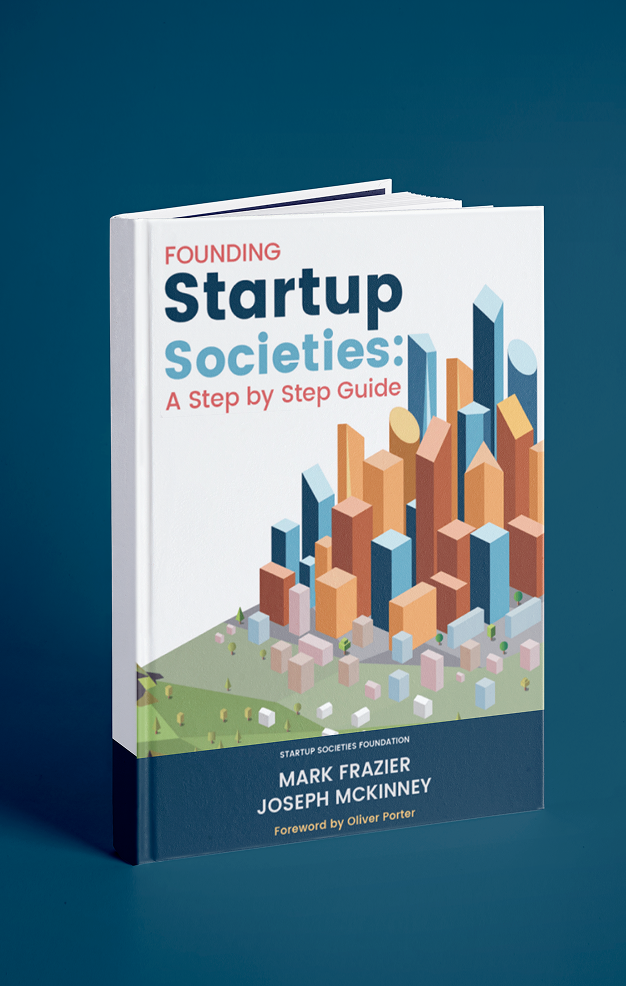
Explore the table of contents below.
Table of Contents
APPRECIATION……………………………. 2
EXECUTIVE SUMMARY…………………………….. 9
Startup Society Opportunities……………………………. 10
Successes – and Shortfalls……………………………… 11
Paths for Inclusion………………………………………… 12
Better Practices………………………………. 12
FOREWORD………………………………. 15
INTRODUCTION……………………………… 17
Who Can Benefit From this Guidebook………………………………. 17
A Full Spectrum of Opportunities………………………………………. 18
How to Read this Book……………………………………………. 18
PART ONE: PREPARING………………………………. 20
Step 1: Explore Market Trends………………………………. 21
Know Key Concepts………………………………. 21
Study Startup Society History……………………………….. 24
Recognize Today’s Driving Forces………………………………. 33
Discern Better Practices for Future Startup Society Ventures…………………………….. 37
Review Different Sized Opportunities…………………………………………… 41
Step 2: Evaluate Your Starting Position… 47
Know Your Passion……………………………. 47
Map Strengths With “STARS”……………………………. 48
Step 3: Set a Bold Vision……………………………. 54
Refine the Vision……………………………. 54
Know the Value Propositions……………………………. 58
Commit to Core Values……………………………. 63
Step 4: Create the Startup Society Venture……………………………. 64
Gather a Core Team……………………………. 64
Create the Legal Vehicle……………………………. 66
Assign Positions……………………………. 68
Step 5: Form a Consortium…………………………….70
Prepare Initial Pitch Materials……………………………. 70
Get Endorsements ……………………………. 72
Identify Prospective Consortium Members…………………………….72
Approach Candidates in Phases……………………………. 74
Step 6: Attract Allies for Lead With a Gift Initiatives……………………………. 76
See How “Leading With a Gift” Launched Early Startup Societies 77
Decide Which Initiatives to Conduct……………………………. 78
Start an Online Movement……………………………. 79
Step 7: Prepare a Baseline Business Model……………………………. 87
Prepare a Minimum Viable Product: A Quickstart……………………………. 88
Plan for an Expansion Era……………………………. 90
Structure Expansion Areas as a Build-Operate- Transfer (BOT……………………………. 90
Step 8: Launch a Competition……………………………. 92
Choose Formal or Informal Competitions…………………………….93
Define Benefits for Competitions……………………………. 94
PART TWO: NEGOTIATION……………………………. 101
Step 9: Promote the Project Opportunity……………………………. 102
Prepare General Outreach Presentation……………………………. 102
Create Targeted Materials……………………………. 104
Design Online Orientation Events……………………………. 107
Step 10: Choose Best Prospects……………………………. 109
Rate Response Quality……………………………. 110
Check Backgrounds (Only of Shortlisted Responders)……………………………. 111
Confirm Investor Interest……………………………. 112
Step 11: Move to Memoranda of Understanding……………………………. 114
Assess Market Opportunities for Quickstarts With Candidate Partners……………………………. 115
Sign Conditional Memoranda of Understanding (MOU)……………………………. 116
Score the Local Partner Memoranda of Understanding……………………………. 121
Step 12: Secure Funding for Fieldwork in Semifinalist Areas……………………………. 124
Prepare a Working Capital Prospectus……………………………. 124
Explore Ways to Reduce Requirements……………………………. 125
For Working Capital……………………………. 125
Review a Sample Prospectus……………………………. 127
Include Supporting Materials for Funders……………………………. 134
Secure Commitments by Working Capital Providers……………………………. 135
Step 13: Visit Possible Sites and Communities……………………………. 136
Engage the Community……………………………. 136
Evaluate the Candidate Local Partner……………………………. 139
Assess the Business Opportunity……………………………. 139
Confirm Public Sector Readiness……………………………. 140
Step 14: Negotiate Contingent Agreements in Finalist Areas……………………………. 141
Lay the Groundwork for Negotiations……………………………. 142
Agree on Policy Reforms……………………………. 149
Agree To Ease Other Burdens……………………………. 151
Set Triggers for Site Commitments……………………………. 153
Agree on Endowment Zone (Community Land Trust)…………………………….157
Step 15: Confirm Feasibility of the Top Site……………………………. 161
Conduct a Detailed Market Assessment……………………………. 164
Do Physical Planning (Including Capital Cost Estimates)……………………………. 165
Plan Ownership and Management Structure……………………………. 167
Prepare Financial Projections and Analyses……………………………. 168
Run Economic, Environmental and Social Impact Projections……………………………. 172
Secure Investor Commitments……………………………. 173
Step 16: Help Government Deliver Policy Reforms……………………………. 174
Map a “Low/High” Scenario……………………………. 174
Fast-Track the “Low/High” Scenario 174
Engage the Local Partner as Community Support Builder for “High” Reforms……………………………. 176
PART THREE: GROWING……………………………. 178
Step 17: Initiate the Quickstart Area……………………………. 179
Set the Stage……………………………. 179
Activate the Different Quickstart Components……………………………. 181
Step 18: Grow the Startup Society……………………………. 196
Step 19: Stay Competitive……………………………. 210
Use Innovative Management Methods……………………………. 210
Watch for “Blinking Indicators”……………………………. 216
Monitor Vital Signs……………………………. 216
Keep Policies Up To Date……………………………. 217
Track Market Changes……………………………. 218
Step 20: Expand Into New Markets……………………………. 219
Choose the Markets……………………………. 219
Develop the Expansion Strategy……………………………. 222
Launch with a Splash……………………………. 224
MESSAGES FROM THE FUTURE……………………………. 226
Free Land for “Crowdmoves”……………………………. 226
Friends Bootstrap an Ecovillage……………………………. 228
Students Shed Debt at Next Collage Campuses……………………………. 229
Endowment Zones Lift Detroit Neighborhoods……………………………. 230
China and Singapore Ease “Debt Traps” Along the New Silk Road……………………………. 232
Seasteaders Respond to Frontiers Challenges…………………………… 233
Conclusion……………………………. 235
APPENDIX……………………………. 236
A startup Societies Glossary……………………………. 237
Model Policy Reforms for Integrated Startup Societies……………………………. 247
Conforming Market Interest in Policy Change……………………………. 268
Site Selection Date Gathering for Free Economic Zones……………………………. 270
Sample request for Designation (under existing alternatives)……………………………. 272
Draft Agreement Letters……………………………. 288
Model Concession Provision for a Startup Society……………………………. 291
Quickstart Private Residential Community (draft Prospectus for a Popup Village)……………………….. 312
Quickstart Financial Model……………………………. 355
Management of Larger Startup Societies……………………………. 368
Procurement Documents for Corporation to Provide Services……………………………. 383
Possible Resource Partners……………………………. 437
Author Backgrounds……………………………. 439
Works Cited……………………………. 442
Support research and public education

Startup Societies Foundation advances research and public education on special jurisdictions, startup societies and experimental governance through publications, public resources and educational events.


Contact Us
United States
Opening Hours:
Mon – Fri: 9:00 am – 6:30 pm